
Drone Chargers Guide: Balance, Chemistry and Power
A charger is the most underrated tool in a drone kit. A badly charged LiPo packs less punch, swells sooner and ends flights early, while a properly balanced pack flies consistently and lasts longer. Choosing a charger is about understanding what balance charging actually does, matching the charger power to your cells, and separating the bench workflow from the field workflow.
What a balance charger does
A LiPo pack is several cells in series. Over flights the cells drift slightly apart, and if you charge the pack as a whole the weakest cell gets over-driven. A balance charger charges the pack while equalising each cell, bringing every cell to the same voltage. That equalisation is what keeps the pack healthy; a charger without a balance function is fine for storage but not for the packs you fly hard.
Chemistry, cell count and power budget
Different chemistries want different charge currents and cutoff voltages, so a charger must support the chemistry you fly. Cell count sets the pack voltage, and the charger must handle that string. Power budget is the practical limit: watts divided by voltage sets the amps, and a low-watt charger charges large packs slowly. A multi-bay bench station such as the LiitoKala Lii-S6 six-bay charger rotates several cells at once, which is the realistic answer for a fleet rather than trying to push one huge pack fast.
Field versus bench charging
Field charging trades speed for portability. A bench station on AC charges fast at home; a field solution on a power bank charges gently on site. Trying to charge a large multirotor pack rapidly in the field usually means carrying more power than the rest of the kit combined. Most pilots are better served by rotating a few pre-charged packs on a bench station, and topping small cells in the field.
Catalog charger options and the kit around them
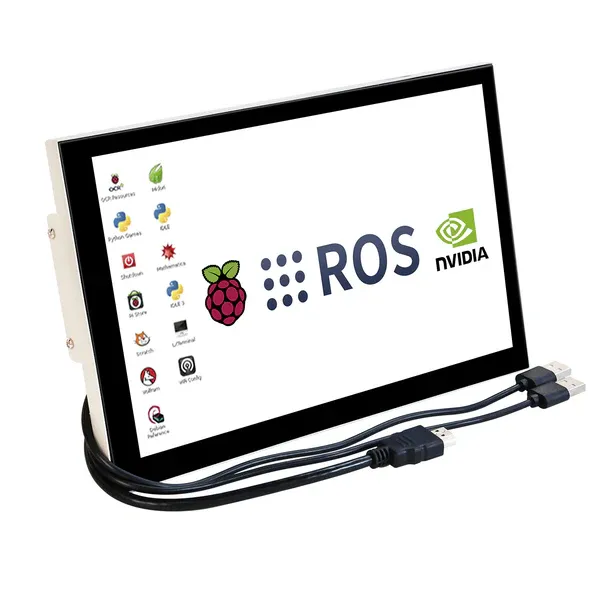
Pair the charger with the consumables it supports: matched carbon-fiber propeller pairs keep the current draw predictable so packs drain evenly, and a bright ground display such as the 10.1-inch touch screen with metal bracket keeps the operator watching voltage on site. The full charging and accessory range is grouped in the 9imod catalog category, so a kit is built around one consistent power workflow rather than scattered adapters.
A safe charging workflow
Always balance-charge flying packs. Charge on a fire-safe surface and never leave a charging pack unattended in an enclosed space. Store packs at resting voltage between flying days, retire any cell that swells or sags, and keep a consistent rotation so no single pack is deep-cycled every flight. The charger is what keeps a fleet alive; treat it as carefully as the airframes it powers.


A safe charging workflow checklist
A charging routine protects the fleet more than any single upgrade. Always balance-charge flying packs, because a series LiPo drifts cell by cell and an unbalanced charge over-drives the weakest cell. Charge on a non-flammable surface, never leave a charging pack unattended inside an enclosed bag or vehicle, and keep a fire-safe container within reach. These habits are not dramatic; they are the difference between a healthy pack and a swollen one, and they cost nothing to follow.
Power budget decides the charger. Watts divided by pack voltage sets the charge current, and a low-watt station charges large packs slowly. Most pilots are better served by rotating a few pre-charged packs on a multi-bay bench station than by trying to push one large pack fast. Field charging on a power bank trades speed for portability; trying to charge a large multirotor pack rapidly in the field usually means carrying more power than the rest of the kit combined. Match the charger power to the packs you actually rotate, and charge small cells on site while the bench station handles the big ones.
Storage voltage is the habit that extends pack life. A pack stored fully charged or fully discharged degrades quickly, so a good charger holds a storage mode that brings each cell to the resting voltage. Between flying days, set the fleet to storage rather than leaving it hot from the last flight. Rotate packs so no single cell is deep-cycled every session, and retire any pack that swells, sags under load or shows a cell out of balance. A well-cared-for fleet stays consistent; an abused fleet develops weak cells quietly.
Keep a charging log alongside the maintenance log. Note cycles per pack, the charge rate used, and any pack that dropped a cell or swelled. Over time that log reveals which packs are aging, so a weak cell is replaced before it strands a sortie. The charger is the tool that keeps a fleet flying, and treating it with the same discipline as the airframe itself is what makes a program reliable. Buy a charger that supports your chemistry and cell count, balance every pack, store at rest, and retire weak cells early.