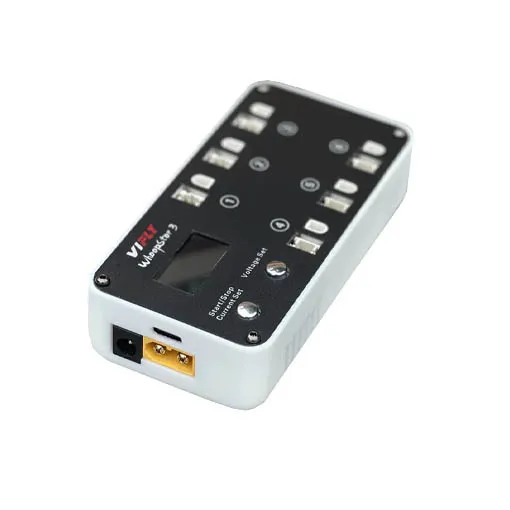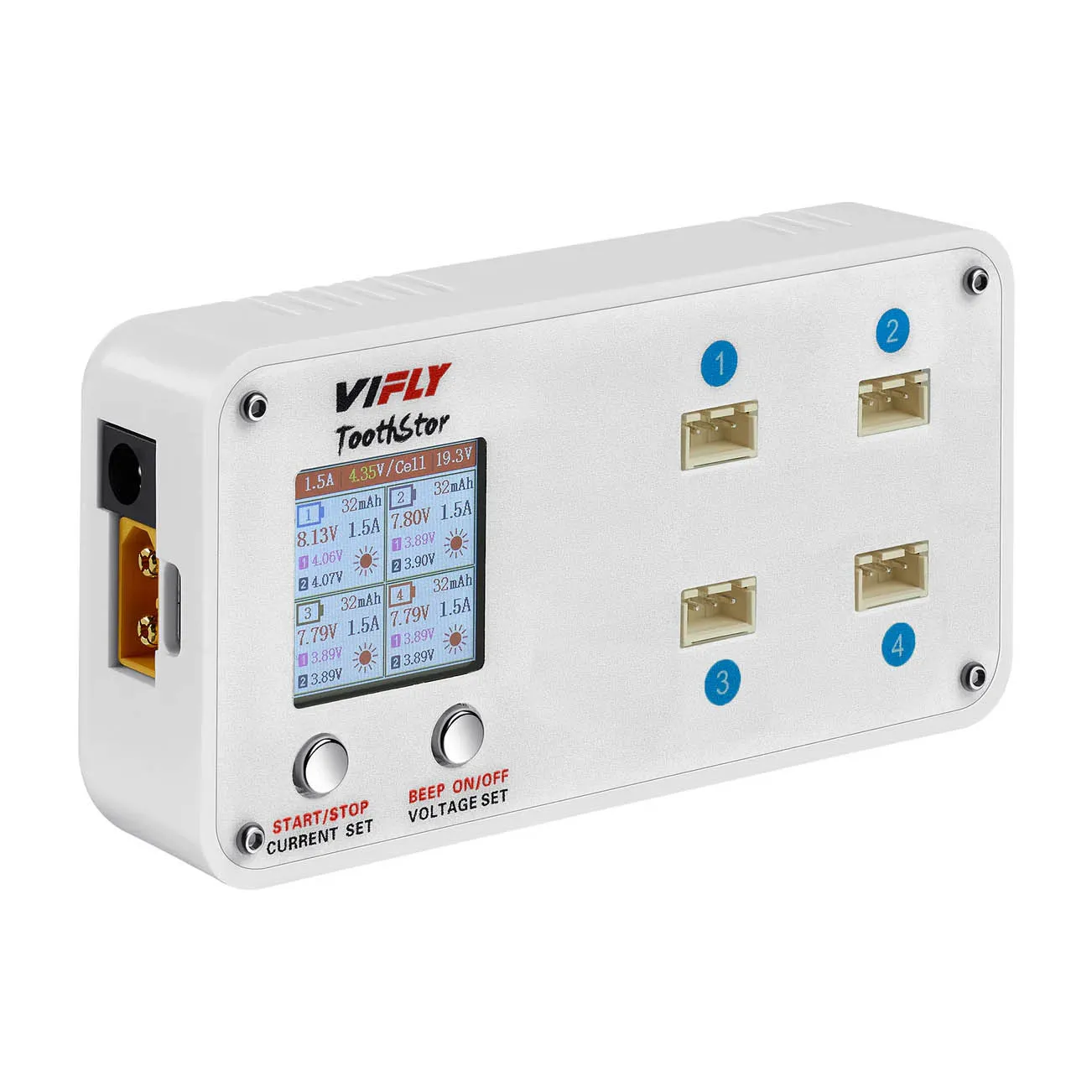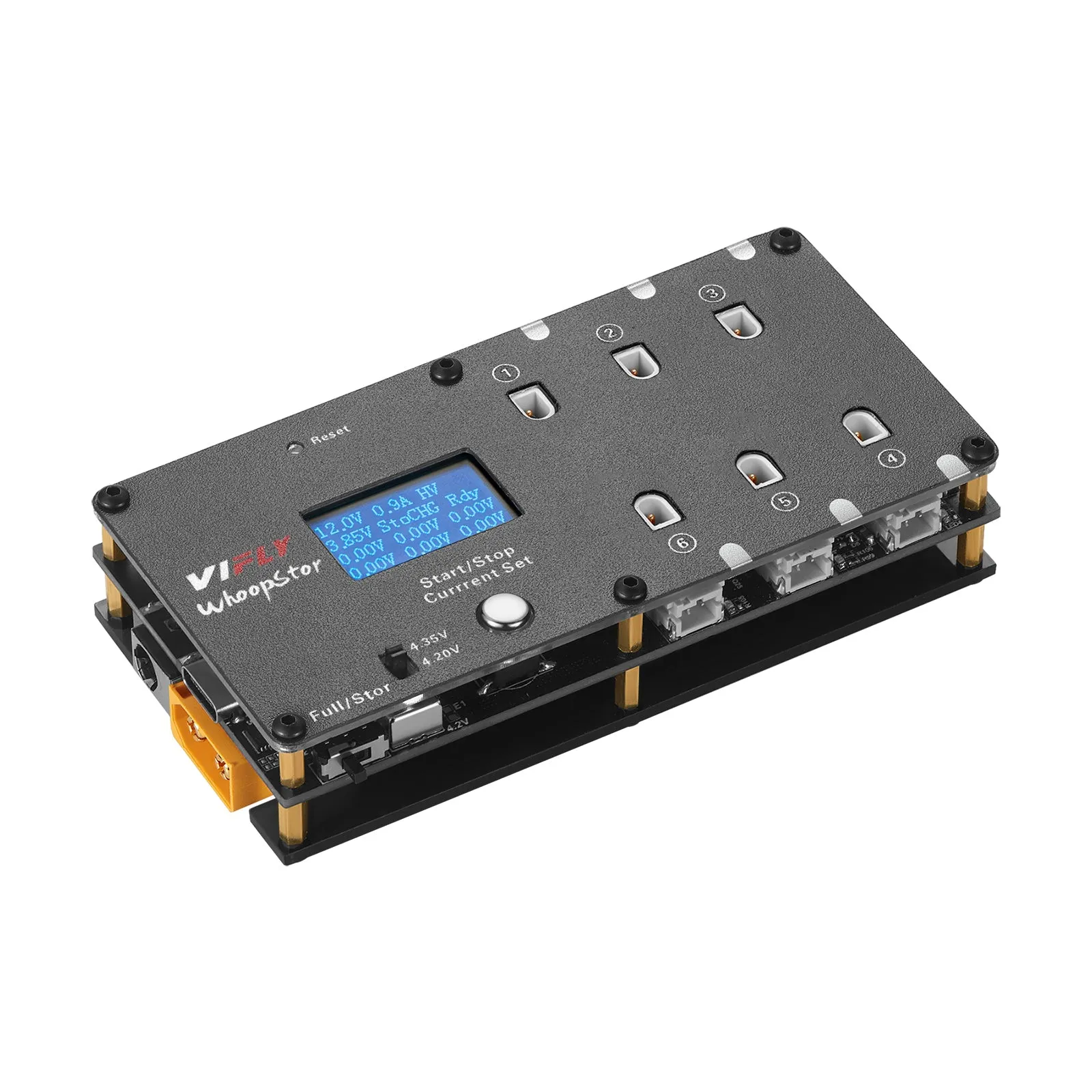
Charger VIFLY WhoopStor V3
Output connectors: PH2.0 / BT2.0
USD · Volume pricing available
Kategori:
Certifications
Global Shipping 7-14 Days
DHL, FedEx, UPS, Air & Sea
Genuine Products
Authorized distribution
Export License Ready
ECCN, CO, CI, PL, EUS docs
24/7 Tech Support
Pre & post sales
Export Compliance
EAR99AI confidence 85% · NLR — No license required. Standard end-use statement recommended.
Buyer Tier Benefits
Tier discounts stack with volume pricing. Automatically applied after your first order.
Buy a VIFLY WhoopStor V3 charger for six 1S batteries
VIFLY is a Chinese brand specializing in FPV accessories. The company produces not only chargers. The assortment includes stroboscopes for VIFLY Strobon drones. The brand also makes timers and displays for testing batteries. The product is aimed at whoop drone pilots. VIFLY is known for its compact and smart solutions.
Charging, storage and balancing in one device. Ideal for whoop drones.
- Six independent channels for simultaneous charging.
- Supports LiPo (4.2 V) and LiHV (4.35 V) batteries.
- Storage mode with automatic adjustment to 3.85 V.
- Three power methods: XT60, DC and USB-C PD.
- Compact dimensions 101x49x22 mm for carrying.
How VIFLY WhoopStor V3 works
The device receives power from an external source. You connect up to six 1S batteries. The processor determines their type and voltage. Then charging begins with the specified current. Each channel operates independently of the others. When 4.2 or 4.35 V is reached, charging stops. Storage mode discharges or recharges batteries to 3.85 V. LEDs indicate the status of each channel.
Technical characteristics and functionality
The WhoopStor V3 model has 6 output ports PH2.0 and BT2.0. Input voltage via XT60 or DC is 7-21V. Via USB-C, PD3.0 support (9/12V) is required. The maximum input power is 30 W. The charging current is adjustable to 0.9 A per channel. The total current is limited by the input power. The device supports LiPo 4.2 V and LiHV 4.35 V. Storage mode sets the voltage to 3.85 V. The dimensions of the device are 101 × 49 × 22 mm. Weight is about 80 grams.
The user can select the charging current by button. Available values are 0.3 A, 0.6 A and 0.9 A. USB-C input requires a Power Delivery adapter. Cell balancing is not needed for 1S batteries. All channels are charged simultaneously without queuing. This saves time in the field.