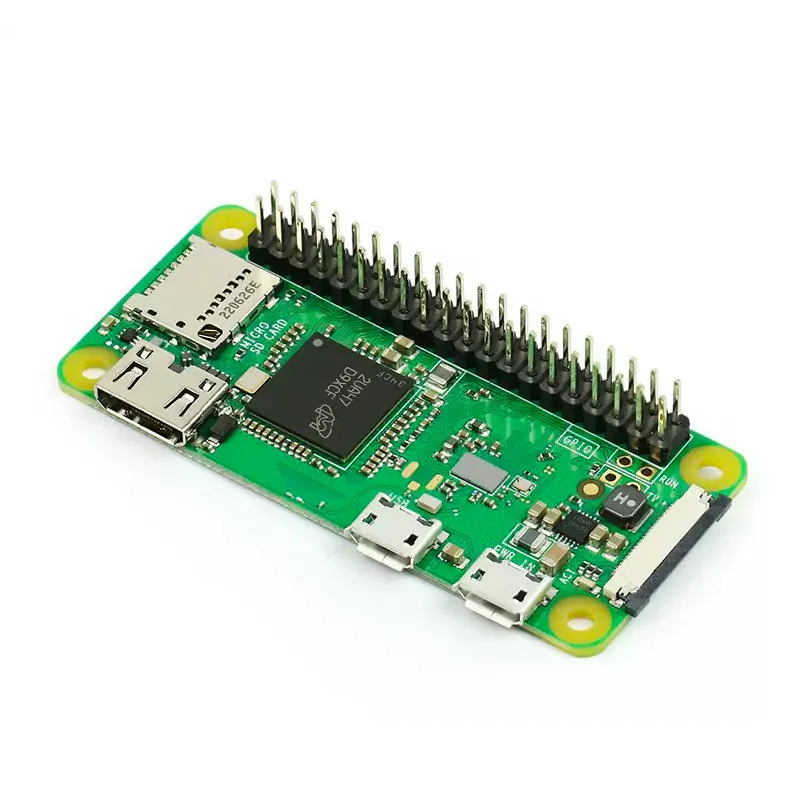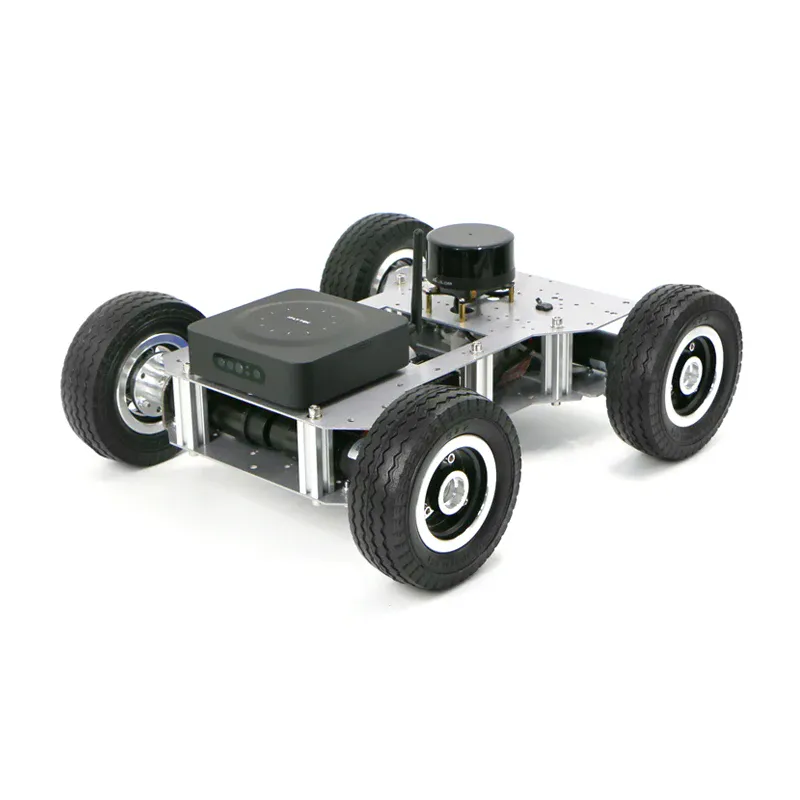
WHEELTEC Ackerman robotic platform on Raspberry Pi 4B (4 GB)
Processor ARM Cortex-A72 1.5 GHz 64-bit (4 cores)
USD · Volume pricing available
Catégories:
Certifications
Global Shipping 7-14 Days
DHL, FedEx, UPS, Air & Sea
Genuine Products
Authorized distribution
Export License Ready
ECCN, CO, CI, PL, EUS docs
24/7 Tech Support
Pre & post sales
Export Compliance
EAR99AI confidence 85% · NLR — No license required. Standard end-use statement recommended.
Buyer Tier Benefits
Tier discounts stack with volume pricing. Automatically applied after your first order.
WHEELTEC Ackerman robotic platform on Raspberry Pi 4B at a competitive price!
Ackerman's WHEELTEC Robotic Platform on Raspberry Pi 4B provides an advanced solution for the development and deployment of autonomous vehicles and robots. Based on the powerful Raspberry Pi 4B (4GB) computing platform, it offers a wide range of capabilities and features for researchers, developers and robotics enthusiasts. WHEELTEC Ackerman is designed using a strong metal frame for stability and durability. It is equipped with four powerful motors with encoders that provide precise motion control and speed control. Ackerman's unique steering system allows the platform to perform tight turning radius maneuvers, making it ideal for navigating tight spaces.
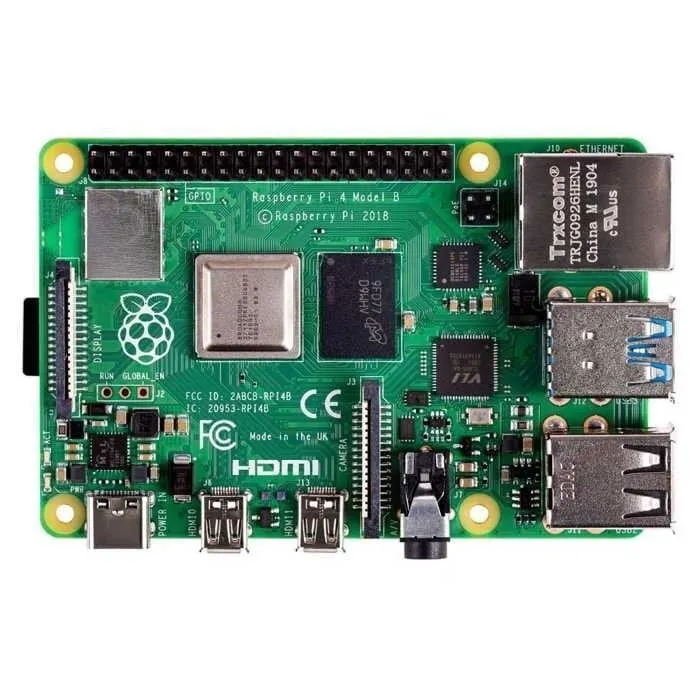
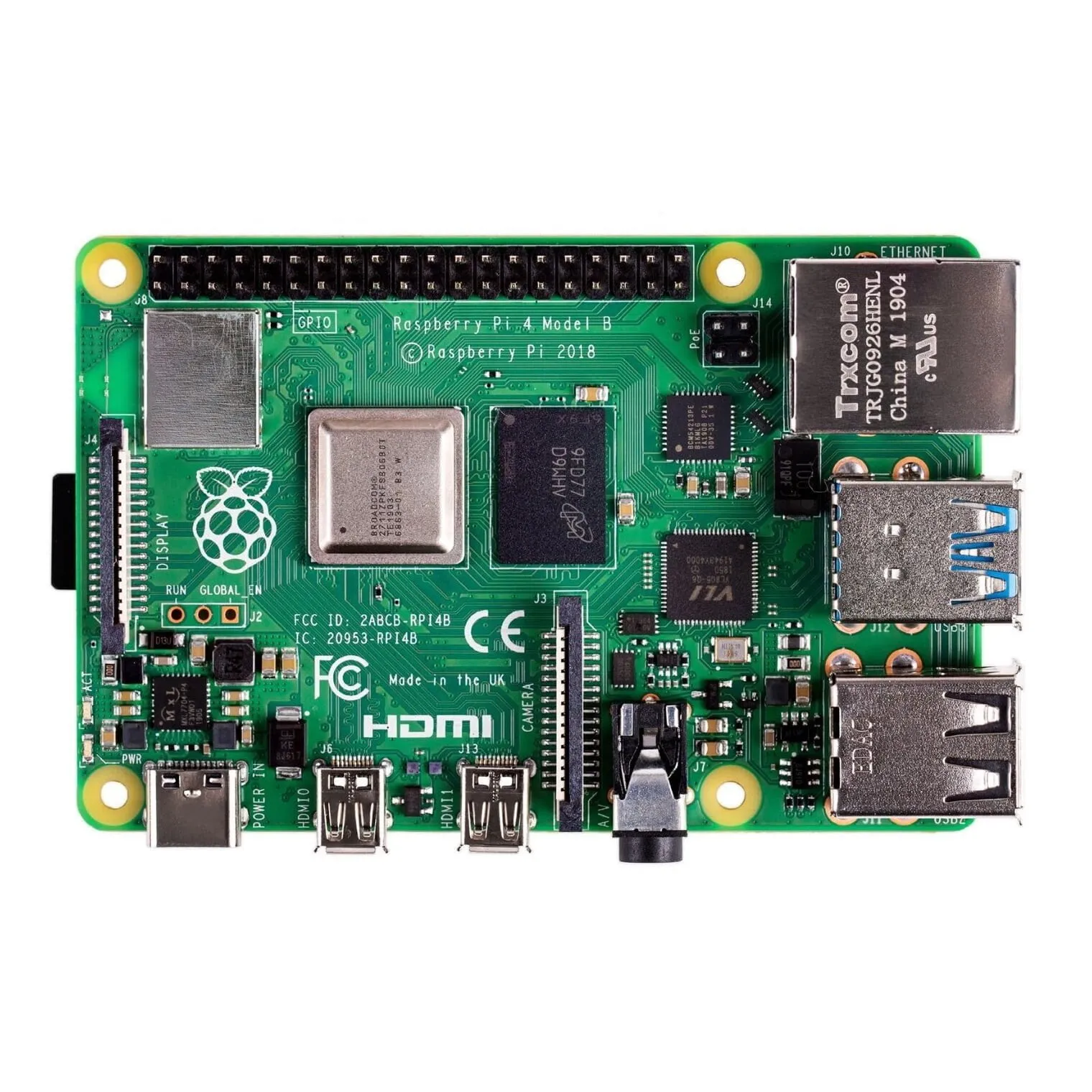
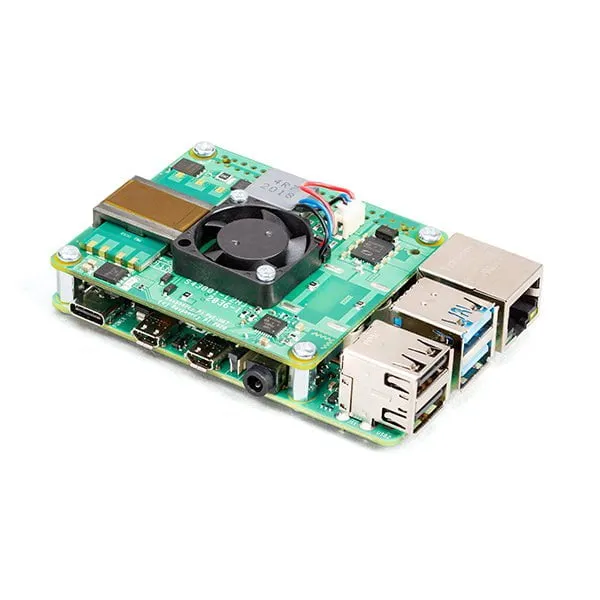
The platform is based on the Raspberry Pi 4B (4GB) single board computer, which provides powerful computing capabilities. It is powered by a 1.5GHz quad-core ARM Cortex-A72 processor, 4GB of RAM, and an integrated GPU. This is enough to run complex algorithms for autonomous driving, image processing and sensor control.
Features and Applications
WHEELTEC Ackerman offers a wide range of capabilities for a variety of applications, including:
- Autonomous driving. The platform can be equipped with various sensors such as cameras, lidars and ultrasonic sensors to create autonomous vehicles. It can be programmed to navigate difficult environments such as city streets or warehouses.
- Robotics. WHEELTEC Ackerman is also suitable for various robotic applications such as exploration, delivery and maintenance. It can be programmed to perform tasks such as mapping the environment, moving objects, and interacting with people.
- Education and research. The platform is an excellent tool for teaching students and researchers the principles of robotics, autonomous driving and artificial intelligence. It provides open access to hardware and software, allowing users to customize and expand its capabilities.
Software and Integration
WHEELTEC Ackerman supports various operating systems including Raspbian, Ubuntu and ROS (Robot Operating System). It is also compatible with popular programming languages such as Python, C and Java. This allows developers to easily create and deploy their own applications on the platform.
The platform also features a range of interfaces such as USB, Ethernet and GPIO, allowing for easy integration of additional sensors, actuators and devices. This enhances the capabilities of the platform and allows users to tailor it to specific application requirements.
Using WHEELTEC Ackerman on Raspberry Pi 4B (4GB) offers a number of benefits:
- Powerful computing capabilities. The Raspberry Pi 4B single board computer provides enough power to run complex autonomous driving and image processing algorithms.
- Precise motion control. Four encoder motors and an Ackerman steering system provide precise motion control and speed control.
- Open platform. Access to hardware and software allows users to customize and expand the platform's capabilities to suit their needs.
- Wide range of applications. WHEELTEC Ackerman is suitable for a variety of applications including autonomous driving, robotics, education and research.
- Affordable price. The platform is available at a competitive price, making it accessible to a wide range of users.
Ackerman's WHEELTEC Robotic Platform on Raspberry Pi 4B (4GB) is a powerful and versatile solution for the development and deployment of autonomous vehicles and robots. Its rugged design, precise motion control capabilities, powerful computing capabilities, and open platform make it ideal for researchers, developers, and robotics enthusiasts who require a reliable and versatile platform for their projects.
Technical Parameters
- Processor ARM Cortex-A72 1.5 GHz 64-bit (4 cores)
- Broadcom VideoCore VI GPU @ 500 MHz
- MIPI CSI Image Output
- Number of GPIO pins 40
- Rated power 15 W (5 V, 3 A)
- Servo Drive Characteristics
- Model S30F
- Maximum angle 180°
- Voltage 5 - 6.5 V
- Torque 20 kg*cm (5 V), 23 kg/cm (6.5 V)
- Reaction speed 0.18 s / 60°
- Servo type digital
- Metal gear mechanism
- Operating dead zone 4 µs
- Standby current 4 mA (5 V)
- Stop current 1.8 mA (5 V)
- Characteristics of Leishen N10P lidar
- Measuring radius: 25 meters
- Scanning frequency 6 -12 Hz
- Sampling frequency 5400 Hz
- Output data angle, distance, light intensity
- Angular resolution 0.4° - 0.8°
- Light resistance 60KLux
- Serial port interface
- Motor type brushless
- 360° scanning available
- Astra Pro RGBD camera specifications
- Depth resolution up to 640 x 480
- RGB resolution up to 640 x 480
- RGB core rate 640 x 480 up to 30fps
- Depth range from 0.6 to 4 m
- USB2.0 interface
- Dimensions 165 x 40 x 30 mm
- Characteristics of WHEELTEC
- Wheels Mecanum wheels, movement in all directions,
- 360 degree free movement (compatible with various common tires)
- Diameter 65 mm
- Load capacity up to 3 kg
- Maximum speed 1.2 m/s
- Operating time 5.5 hours (with light load and speed 0.45 m/s)
- 4 h (at a load of 1 kg and a speed of 0.45 m / s)
- Motor MG513
- Microcontroller STM32F103VET6
- 3119 Servo, 20KG High Torque Digital Steering Gear
- Sensors: laser lidar, rotation angle sensor
- Mobile app control, PS2 wireless controller, CAN
- Features remote control, lidar display and navigation, visual display and navigation, multi-point cruise, lidar tracking, deep vision, visual line patrol, transmission
- images through the application, etc.