Drone motors are the heart of any UAV propulsion system, directly determining thrust, efficiency, flight time, and payload capacity.
Engines Market Overview
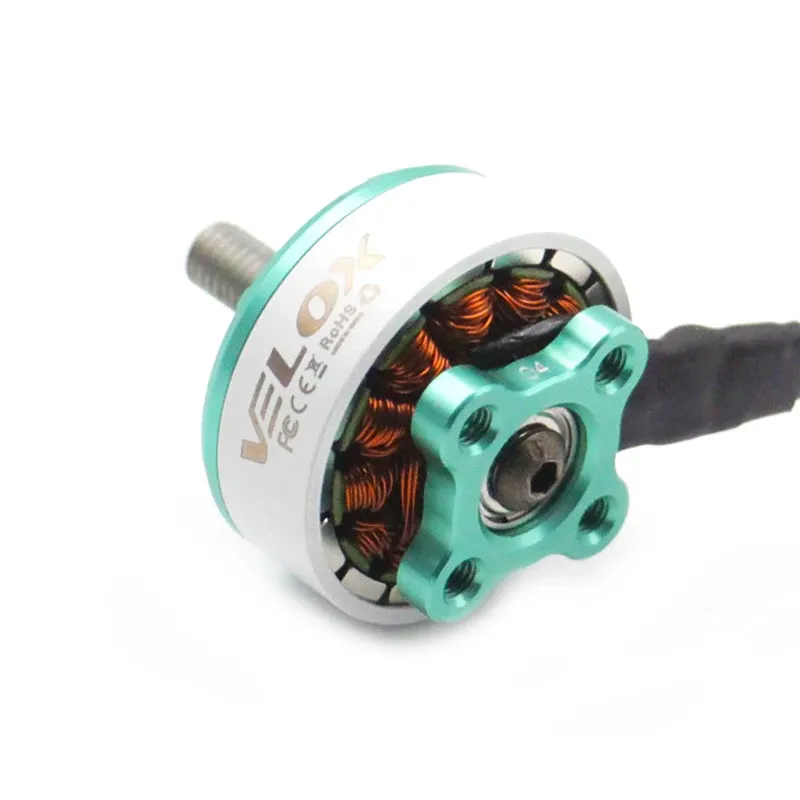
Key Specifications & Features
- Brushless DC (BLDC) motors with 1806 to 8017 frame sizes covering micro to heavy-lift applications
- KV ratings from 100 KV (heavy-lift) to 3000+ KV (racing), matched to propeller size and battery voltage
- Thrust ranges from 50g (micro) to 15kg+ per motor (industrial heavy-lift)
- Efficiency ratings of 3-12g/W determining flight time and battery requirements
- Construction: titanium alloy or steel shafts, N52H magnets, 7075 aluminum bells, NSK bearings
How to Choose Engines
A systematic 5-step process for selecting drone motors for your specific operational requirements.
- 1
Determine Total All-Up Weight (AUW)
Calculate the complete weight of airframe, battery, payload, and accessories. Each motor should produce 2:1 to 3:1 thrust-to-weight ratio for stable flight, or 4:1+ for aerobatic/FPV.
- 2
Select Frame Size & KV Rating
Match motor stator size to frame: 14xx for 3", 22xx-23xx for 5", 28xx for 7", 31xx-41xx for 10-15" heavy-lift. KV inversely relates to prop size — high KV (2400+) for small props, low KV (300-900) for large props.
- 3
Choose Battery Voltage (S Count)
4S for 5" freestyle (1700-2700 KV), 6S for long-range/cinematic (1300-1900 KV), 8-12S for industrial (100-500 KV). Higher voltage reduces current draw and improves efficiency.
- 4
Evaluate Efficiency & Thermal Performance
Check thrust tables at 50% throttle — this is cruise power. Motors running above 80% efficiency at cruise deliver longest flight times. Ensure temperature stays below 80°C under sustained load.
- 5
Verify Build Quality & Bearings
Look for N52SH/N52UH high-temp magnets, single or dual ball bearings (NSK/NMB), 7075-T6 aluminum bell, hollow titanium shaft for weight savings. IP-rated motors for agricultural/maritime use.
Top Rated Engines on Aegisky


Key Terms & Definitions
KV Rating
RPM per volt applied. A 2400 KV motor on 4S (14.8V) spins at ~35,520 RPM no-load. Lower KV = more torque for larger props.
Thrust-to-Weight Ratio
Total maximum thrust divided by AUW. 2:1 minimum for stable multirotor flight; 5:1+ for aggressive FPV.
Stator Size
Motor dimensions (e.g., 2207 = 22mm stator width, 7mm height). Larger stator = more torque and thrust but heavier.
N52 Magnets
Neodymium magnet grade. N52 is strongest standard; N52SH/N52UH variants withstand higher temperatures (120-180°C).
Frequently Asked Questions
What KV motor do I need for a 5-inch FPV drone?
For 5-inch FPV freestyle or racing on 4S, choose 2300-2700 KV. For 6S long-range or cinematic, choose 1700-1900 KV. The lower KV on 6S provides similar RPM with better efficiency and less heat.
How long do drone motors last?
Quality brushless motors last 500-2000 flight hours depending on maintenance. Bearings are the first wear item — replace them when you notice play or noise. Agricultural and maritime motors may need more frequent replacement due to dust/corrosion.
Can I mix different motor brands on one drone?
Not recommended. Mismatched KV, thrust curves, or response times cause uneven flight characteristics and stress the flight controller. Always use four identical motors on a quadcopter.
What is the difference between CW and CCW motors?
CW (clockwise) and CCW (counter-clockwise) refer to propeller rotation direction and thread direction. A quadcopter uses two of each, alternating, to cancel torque. Some modern motors use reverse-thread nuts but spin in the same direction.
Related Resources
Request a Bulk Quote
Need drone motors for your organization? Get competitive quotes from verified suppliers with bulk pricing, OEM/ODM options, and global shipping.
Start RFQ