Countering Drones and UAVs: A Procurement Buying Guide
Buying a counter-UAS system is unusual among procurement projects, because the most tempting part of the answer — making an offending drone fall out of the sky — is also the part a private buyer is rarely allowed to use. This buying guide takes a procurement view: what threat you are actually defending against, which capabilities each layer needs, how budget tiers change the system, and where the legal boundary sits before any request for quote. It deliberately separates the detection problem, which a site can legitimately procure, from the mitigation problem, which is reserved for authorised bodies.
Start with the threat picture
A threat assessment is the first deliverable, not the last. Drones that worry a site range from a hobbyist's multirotor flown for photos, through a small delivery-style aircraft on a fixed route, to a purpose-built platform carrying something it should not. Each has a different control-link frequency, a different signature and a different behaviour. A buyer who skips this step and buys a generic box usually ends up detecting nothing they actually care about. Write down the drones you realistically expect — how they are flown, on what link, and at what altitude — before evaluating any sensor.
Most small consumer and hobby drones fly on common 2.4GHz and 5.8GHz links and on video downlinks in those bands, which shapes what a passive radio sensor needs to hear. A fixed-wing intrusion behaves differently from a hovering multirotor, and a sensor that spots one may miss the other. The threat picture decides which detection layer earns its budget, and it should be revisited as the local airspace changes. The catalog's radio awareness gear, such as a 3.3GHz 16-channel video receiver, illustrates the kind of receiver-level tooling a system integrator evaluates when building awareness.
The detection and identification layer
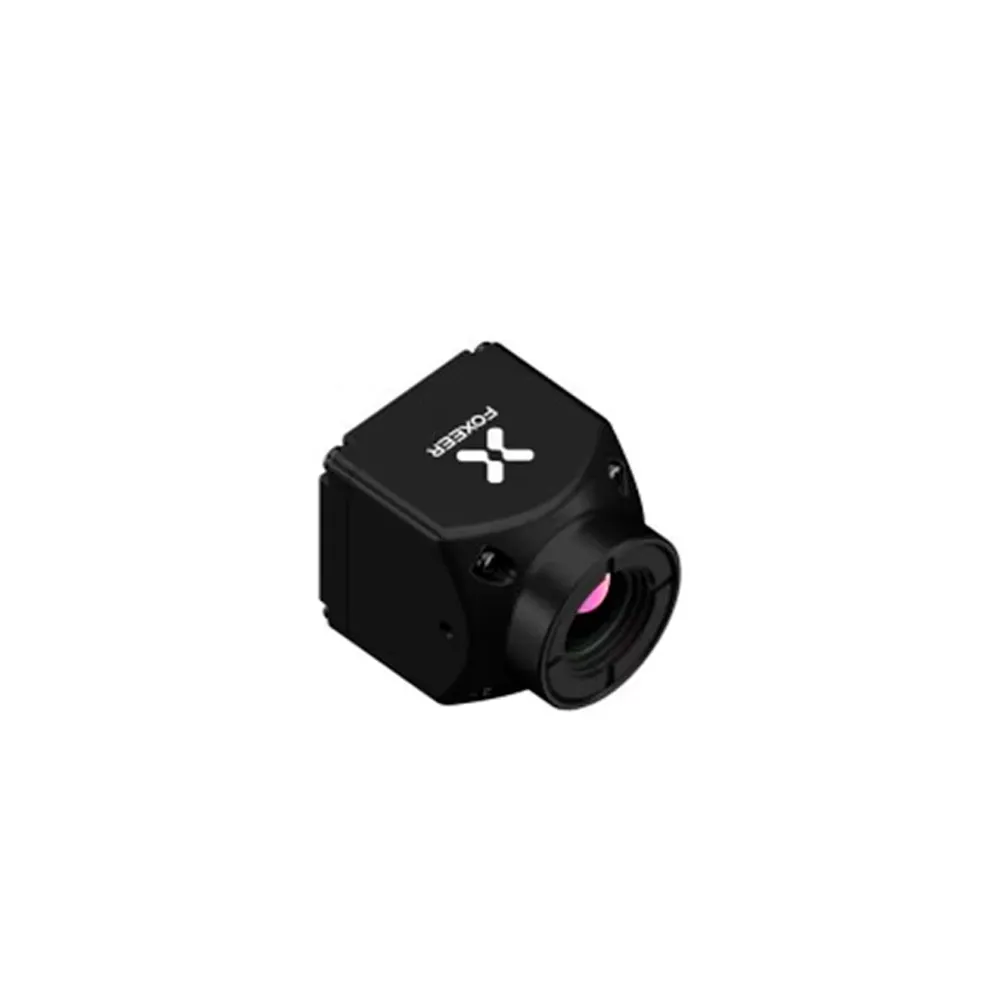
Detection is where a responsible procurement starts, because knowing a drone is there is legal, useful and sufficient for many security workflows. The layer combines passive radio detection — listening for the control link and the video downlink — with optical and thermal observation, and sometimes radar for low, slow targets. A thermal imager like the Foxeer FT640 V2 analogue thermal camera helps an operator visually confirm a small airframe once it is close, especially at night. Detection alone rarely stops the drone, but it triggers the alert, the response and the record.
Identification is the step that separates a real intrusion from a bored hobbyist. A good system geolocates the pilot by the control-link signal rather than merely reporting an aircraft overhead, and it logs what it saw for the security team. That intelligence — who is flying, on what frequency, from where — is often more valuable than a dramatic intercept, because it lets the authorised body act on a documented event rather than on a panic. Budget for identification as its own requirement, not as a side effect of detection.
The mitigation layer and its limits
Mitigation — disrupting the link, jamming, capturing or physically bringing the drone down — is the capability that carries the legal weight. Transmitting to interfere with a radio control link is a regulated radio-emission act, and intercepting an aircraft physically is a use of force. In most jurisdictions these powers sit with designated national or public authorities, not with a private site operator. A buyer who procures a turnkey defeat box for private use is buying something they cannot lawfully switch on. The honest procurement therefore ends at detection, identification and evidence, and hands the interdiction decision to the authority with the mandate.
This is not a reason to skip the topic. A site that can document an intrusion, geolocate the pilot and hand a clean record to the authority shortens the time to an authorised response. Where the operation is on secured or critical infrastructure, the relevant public authority is usually a willing partner, and the procurement should be designed to feed that partnership rather than to replace it. Any vendor promising unlicensed, stand-alone defeat for private buyers should be treated as a red flag in the evaluation.
Budget tiers and total cost
Counter-UAS spend scales with the site, not with the drama of the threat. A small private site may need radio awareness and optical confirmation on a modest budget, and the useful spend goes into reliable detection rather than into a defeat capability it cannot use. A larger or higher-risk site adds radar coverage, long-range thermal, and a manned operations workflow. Across all tiers, the running cost — maintenance, software updates, trained operators and frequency monitoring — often exceeds the purchase price. Budget for the people and the upkeep, not just the sensor on the roof, because a system nobody monitors is expensive decoration.
Compliance and RF licensing
The compliance step is non-negotiable and it runs on official sources. Radio-emission rules, frequency authorisations and any permitted counter-drone activity are set by the national regulator, and they change; this page does not quote thresholds, because quoting a stale number is worse than quoting none. Before signing a contract, confirm with the national communications and aviation authorities what a site may lawfully install and operate, and keep the vendor's compliance claims tied to current official pages. A procurement that assumes a right it has not checked is the one that gets shut down after the first incident.
Selection path to the RFQ
Work the requirement in order: write the threat picture, specify detection and identification as the core deliverables, plan evidence and hand-off to the authorised authority, size the budget to the site and the running costs, and confirm the legal position in writing. Ask vendors how their system detects, how it identifies, what it logs, and who is authorised to act on it. The 9imod accessory range illustrates the kind of radio and sensing components that integrate into an awareness layer. A well-formed RFQ buys detection and evidence first, and treats any defeat promise as something the regulator must approve.