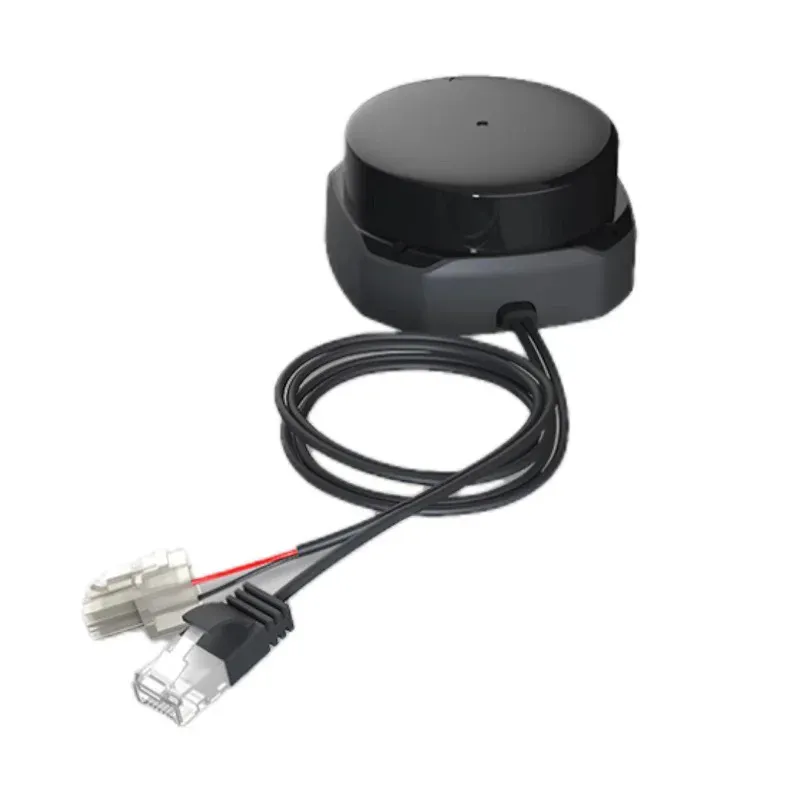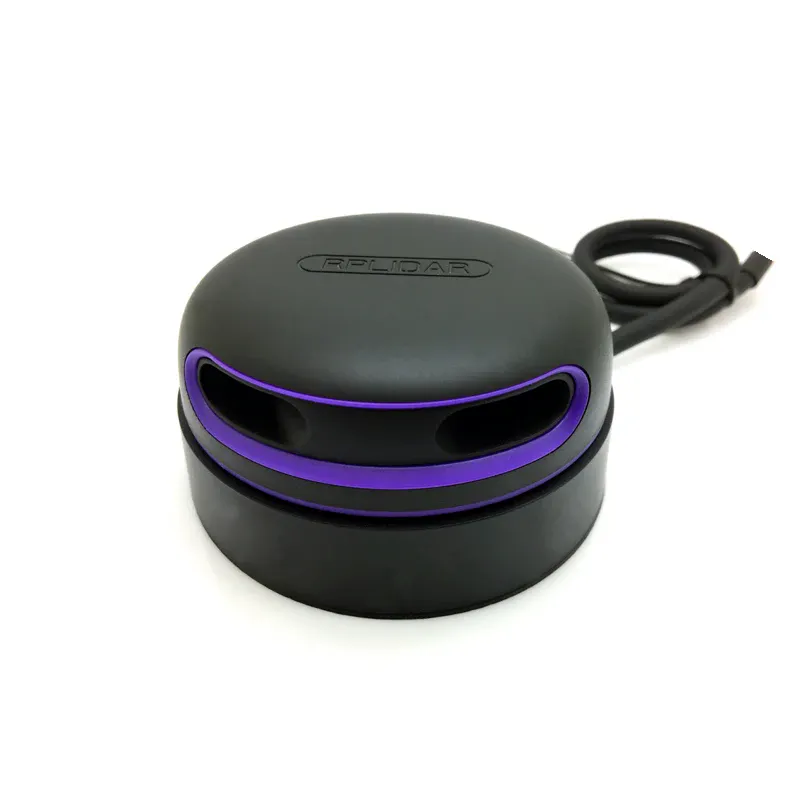
Laser rangefinder RPLIDAR A2M7
Lidar (LiDAR) is a remote sensing technology that uses a laser pulse to collect measurements that can then be used to create 3D models, maps of objects and the environment.
USD · Volume pricing available
Kategorien:
Certifications
Global Shipping 7-14 Days
DHL, FedEx, UPS, Air & Sea
Genuine Products
Authorized distribution
Export License Ready
ECCN, CO, CI, PL, EUS docs
24/7 Tech Support
Pre & post sales
Export Compliance
6A005AI confidence 65% · Export license may be required depending on destination and end-use.
Buyer Tier Benefits
Tier discounts stack with volume pricing. Automatically applied after your first order.
Order the RPLIDAR A2M7 laser rangefinder and get the basis for autonomous navigation!
Laser rangefinder RPLIDAR A2M7 is a professional lidar for scanning space. It creates a detailed 2D map of your environment in real time. The device is critical for autonomous robots and drones. You will be able to give your equipment the ability to see and avoid obstacles. It is a proven and popular model in the world of robotics and research.
This lidar uses a safe laser beam for measurements. It rotates and scans the entire space around it 360 degrees. The device measures distances to objects with millimeter accuracy. The obtained data is used to build a map and determine the location. Your drone or robot will be able to navigate an unfamiliar environment.
-
High scanning frequency for a smooth and detailed map of space.
-
Measuring range up to 12 meters with high accuracy.
-
Resistance to external light for working in different lighting conditions.
-
Durable and lightweight body for installation on mobile platforms.
-
Full compatibility with robotic platforms ROS and others.
How does this laser scanner work?
Lidar emits laser pulses that bounce off surrounding objects. The sensor records the reflected signal and measures its return time. Knowing the speed of light, the processor calculates the distance to the point of reflection. The rotating module sequentially scans all directions. This creates a point cloud that accurately describes the contours of the room.
Maps are built from this point cloud. SLAM algorithms determine the robot's position on this map. This allows you to build routes and avoid unexpected obstacles. The system does not depend on external light sources or GPS signals. It works indoors, underground and in other challenging environments.
Technical characteristics and areas of application
Model A2M7 has improved characteristics. The measurement range is from 0.15 to 12 meters. The sampling rate reaches 8000 measurements per second. Angular resolution less than 1 degree. The device is powered by 5V and has low power consumption. The housing is protected from dust and light splashes.
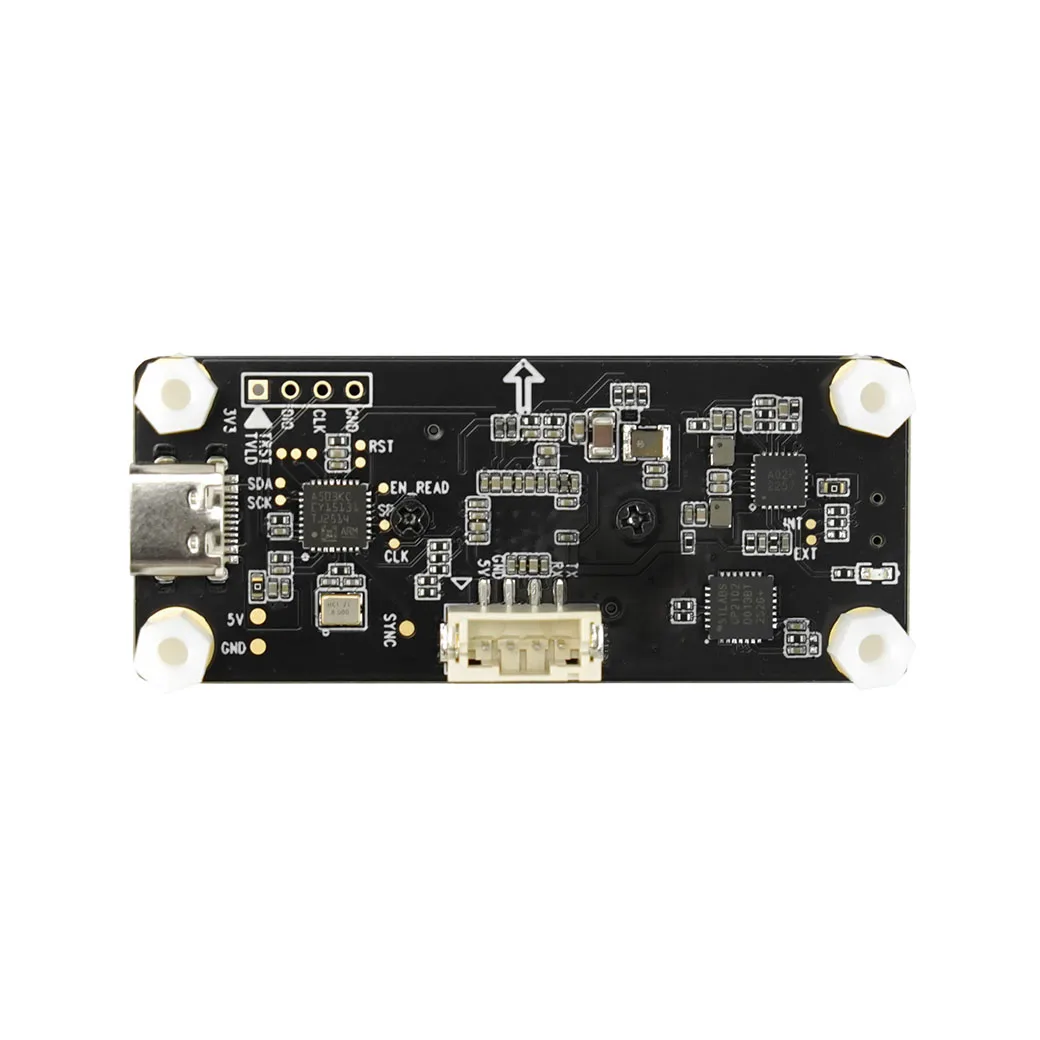
The functionality includes the output of raw measurement data. You get angles and distances for each scan point. The device is compatible with popular platforms ROS, RoboStudio. The built-in driver makes integration into your projects easy. Configuration is performed via the UART serial interface.
This lidar is widely used in various fields. In robotics to create autonomous cleaners or couriers. In unmanned aerial vehicles for navigation in buildings. To create 3D maps of premises and inventory of objects. In security systems for motion tracking. Any autonomous driving project benefits from this sensor.
Lidar installation requires attention to installation. It must be placed with a good 360 degree view. Do not cover the scanning area with structures or wires. Vibrations from motors can affect data quality. Use dampers to isolate the sensor from body vibrations. Correct calibration improves measurement accuracy.
Lidar is compatible with popular single board computers. It easily connects to Raspberry Pi, Jetson Nano or on-board computers. Data can be processed in real time to make decisions. This opens the way to the creation of intelligent autonomous systems. Your devices will be able to explore and navigate independently.
Main Features
- Distance range (m) - 16 (white objects), 10 (dark objects)
- Angular range (°) - 0 - 360
- Scan field (°) – -1.5 – 1.5
- Minimum working distance (mm) - 0.2
- Angular resolution (°) - 0.225
- Sampling frequency (Hz) – 16000
- Scanning speed (Hz) – 5 – 15 (10)
- Weight (g) – 190
- Temperature range (°C) – 0 – 40 (20)
Laser characteristics:
- Laser wavelength (nm) – 775 – 795
- Laser power (mW) – 10 (norm) – 12 (max)
- Pulse duration (µs) – 60 (norm) – 90 (max)
- Laser safety class - IEC-60825 Class 1
Communication interface:
- Communication interface - TTL UART
- Bandwidth (b/s) - 256000
- Operating mode - 8N1
- Output voltage (high, V) - 2.9 - 3.5 (HIGH)
- Output voltage (low, V) - 0.4 (LOW)
- Input voltage (high, V) - 1.6 - 3.5 (HIGH)
- Input voltage (low, V) - -0.3 – 0.4 (LOW)
Power supply and consumption:
- Scanner system voltage (V) - 4.9 - 5.2
- Scanner system voltage ripple (mV) - 20 (recommended) - 50
- Starting current (mA) - 2500
- System starting current (mA) - 1500
- Supply current - 200-220 (sleep mode, 5V), 450-600 (operating mode, 5V).