Recently, a State Grid Corporation of China power unit conducted a live-fire drill for power repair and personnel search and rescue in mountainous areas. The drill was conducted in a complex scenario involving power outages, disconnections, and disruptions at altitudes ranging from 500 to 1200 meters. The mountainous terrain presented significant elevation changes, and the remote control signal for drones was blocked, preventing long-range reconnaissance. 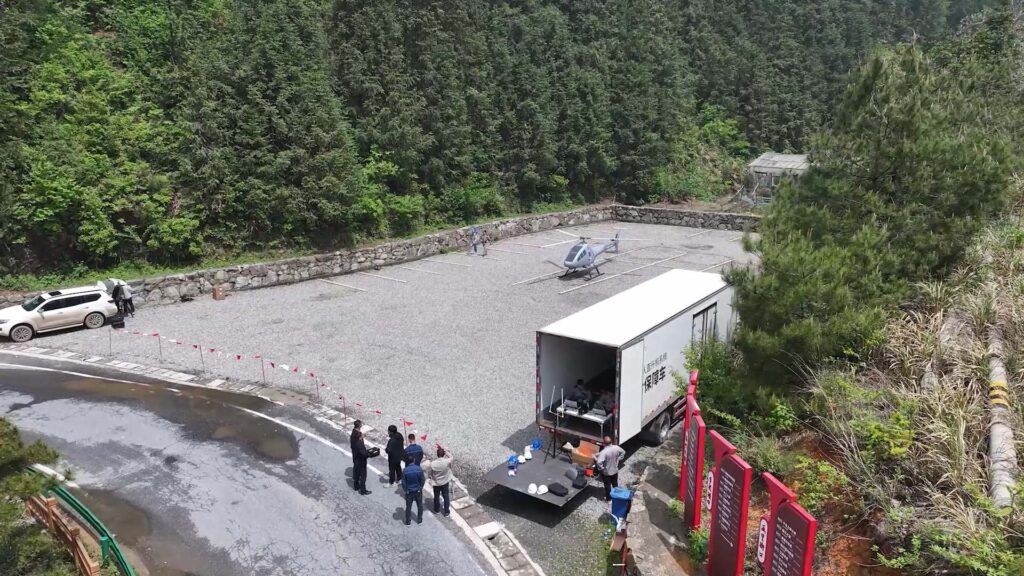
The Sinowheatfield Beyond-Line-of-Sight (BLOS) Air-to-Ground Collaborative Communication System has enabled DJI Matrice 300 RTK and Matrice 350 RTK drones (hereinafter referred to as M300 and M350 drones) to successfully achieve efficient linkage in drone relay flight, non-line-of-sight disaster reconnaissance and material delivery, and multi-terminal information sharing, providing a new solution for emergency support during the upcoming flood season. 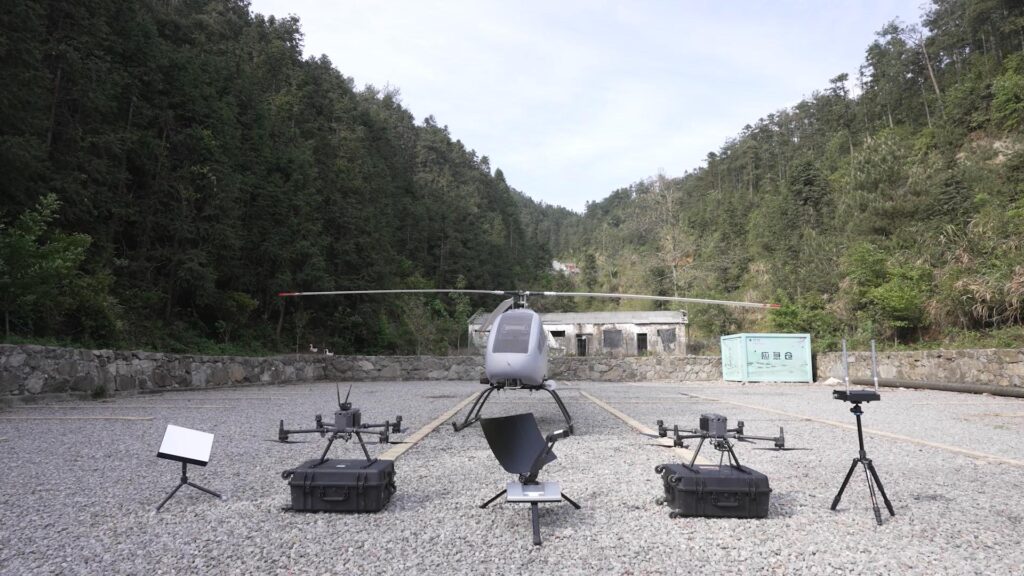
Three core highlights of the exercise plan
1) Relay Flight Control, Beyond-Visual-Ranged Operations

Three UAVs carrying air-to-ground communication terminals took off to operate, serving as both reconnaissance and aerial communication relay nodes, forming an integrated air-to-ground network. The UAVs were controlled via a beyond-visual-range flight control link, overcoming the limitations of mountainous environments and enabling beyond-visual-range disaster reconnaissance and precise delivery.2)Real-time video sharing and comprehensive situational awareness Reconnaissance footage from drones is transmitted back to the on-site command center in real time and simultaneously shared with the smart terminals of all ground search and rescue personnel. This allows search and rescue team members and commanders to monitor the dynamics of the target area in real time, improving team collaboration efficiency.
3) Wide-area network communication and real-time information sharing

Leveraging the relay communication capabilities of drones, a broadband wireless communication network covering 15 square kilometers is constructed. Combined with a dedicated communication app, all ground personnel can conduct WeChat-like communication, enabling real-time communication and location sharing through voice, images, and other means, significantly improving the efficiency of visual communication and command. 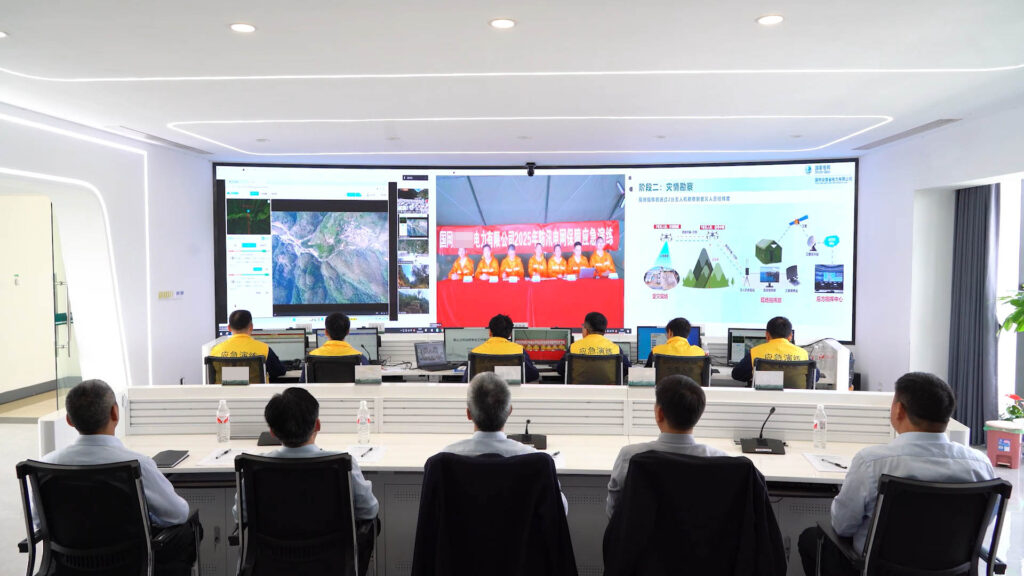
Actual results
Lock the target area within 5 minutesEmergency supplies were delivered precisely within 20 minutes.Real-time video sharing and comprehensive situational awarenessUninterrupted communication throughout the entire process ensured the real-time flow of rescue information.Our technical lead stated, "This exercise verified that the beyond-visual-range air-to-ground collaborative communication system enables DJI drones to network and fly in complex terrain with three distinct sections, as well as providing visualized emergency communication capabilities. In the future, we will further optimize the system's stability to make it adaptable to more complex environments."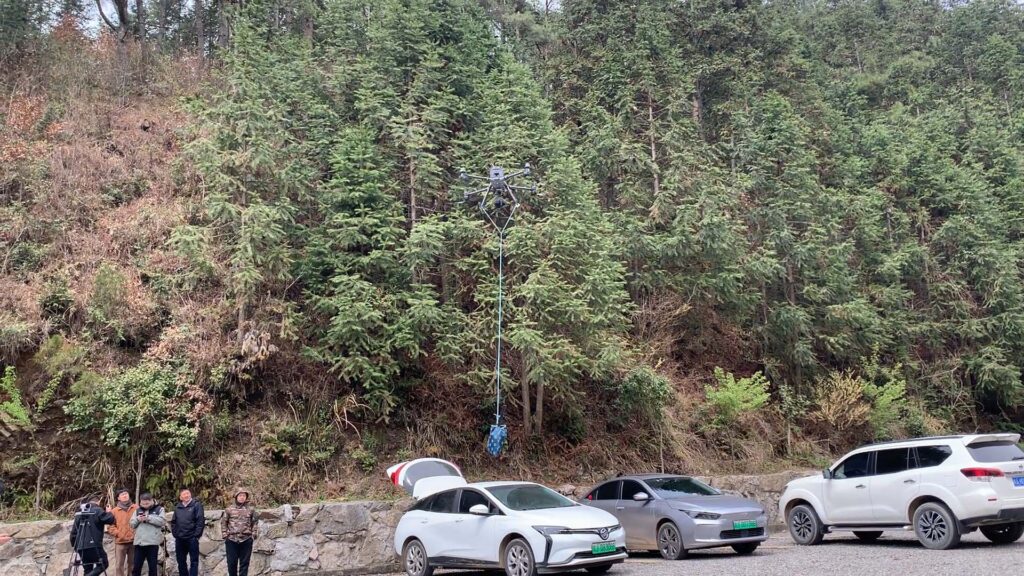
Scenarios and Pain Points
In mountainous emergency rescue operations, the complex terrain makes communication between personnel difficult, hindering real-time situation monitoring between the front and rear lines, and making it challenging for drones to conduct non-line-of-sight operations.

In April 2025, power companies conducted live-fire drills simulating past disaster scenarios to improve equipment adaptability and enhance disaster response capabilities.
Exercise equipment
Portable satellite stations, drones, airborne radios, ground stations, and individual soldier-carried radios. Drill subjects
① Disaster reconnaissance: Three M350 drones were networked together, with flight control, pod control, and video transmission capabilities. The drones located the disaster site and identified personnel.② Supplies delivery: Drones delivered supplies via backpacks, allowing ground personnel to communicate with the on-site command center via video call through the backpack radios.Exercise results
This solution enables DJI M350 drones to relay signals in the air, complete beyond-visual-range flight control and real-time video reconnaissance transmission, and establish contact with disaster victims by dropping ground radios, among other practical achievements.